Japan’s automotive culture is unlike anything else in the world, a vibrant tapestry woven from decades of engineering excellence, street racing heritage, and an unshakeable passion for motoring. For those who’ve ever dreamt of immersing themselves in this world, there exists a place where enthusiasts gather not by appointment, but by instinct, drawn together by a shared love of spectacular machinery. This isn’t a formal show or a corporate event, but rather a spontaneous celebration of everything that makes Japanese motor vehicles so captivating. It’s a scene that has grown organically over the years, becoming a pilgrimage site for petrolheads from across the globe.
The legendary daikoku parking area: a petrolhead’s paradise in yokohama
Nestled on Daikoku Pier, an artificial island and rest area along the Shuto Expressway near Yokohama, the Daikoku parking area has earned its reputation as one of the most iconic gathering spots for car enthusiasts in Japan. Unlike traditional car shows with entry fees and rigid schedules, this location operates on a completely different principle. There’s no official organisation behind the meets, no committees deciding who can attend, and no advance booking required. Instead, what happens here is something far more genuine: a spontaneous gathering of like-minded individuals who simply want to share their passion for automobiles with others who understand it.
Why Daikoku Has Become a Pilgrimage Site for JDM Enthusiasts
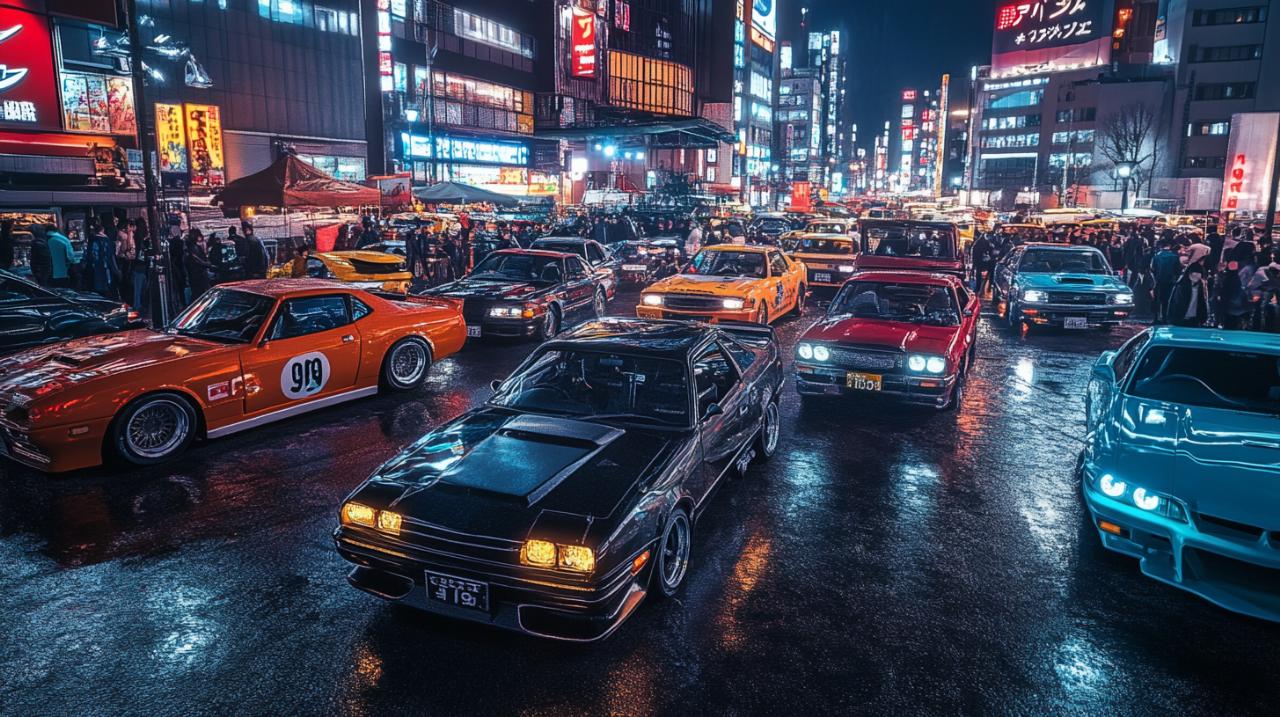
The allure of this location extends far beyond its convenient position near Tokyo. What truly sets it apart is the sheer variety and quality of vehicles that appear on any given evening. Japanese Domestic Market cars dominate the scene, and it’s easy to see why. These are the machines that captured imaginations worldwide, the legends that starred in films, video games, and countless automotive fantasies. From pristine examples of the Nissan Skyline GT-R to immaculately maintained Toyota Supras and the distinctive rotary-powered Mazda RX-7, the diversity on display is staggering. But it doesn’t stop there. VIP sedans with their luxurious modifications sit alongside purpose-built track cars, whilst supercars from Europe occasionally make appearances, and even the odd American muscle car finds its way into the mix.
The appeal is universal because the atmosphere is entirely unpretentious. Owners don’t come here to boast or compete, but rather to chat, admire each other’s work, and capture photographs of vehicles they might never encounter elsewhere. It’s this friendly, welcoming spirit that has transformed a simple rest area into a cultural phenomenon. For visitors from abroad, particularly those who’ve spent years admiring these machines from afar, standing amongst them in their natural habitat is nothing short of magical.
The history and culture behind japan’s most famous car park
The origins of this gathering stretch back to the nineteen eighties and nineteen nineties, an era that many consider the golden age of Japanese automotive design. During this period, Tokyo’s street racing scene was thriving, and drivers would often conclude their late-night runs on the expressways by meeting up at convenient locations to decompress and socialise. Daikoku Pier, with its spacious layout and easy access from the Shuto Expressway, became a natural meeting point. What began as a handful of enthusiasts stopping for a chat after spirited drives gradually evolved into something much larger.
Over the decades, word spread through automotive communities both domestically and internationally. The rise of internet forums and social media amplified its reputation, and soon enthusiasts from around the world were adding it to their travel itineraries. The location’s appearance in various automotive media, including connections to the Fast and Furious franchise and countless YouTube videos, only cemented its legendary status. Today, it represents more than just a car park; it’s a living museum of Japanese automotive culture, a place where the past and present collide in the most spectacular fashion.
Iconic japanese motors you’ll spot at daikoku pa
Walking through the rows of parked vehicles at Daikoku feels like flipping through the pages of a Japanese automotive encyclopedia. The concentration of significant machinery here is remarkable, and for anyone with even a passing interest in motoring, the experience is absolutely intoxicating. These aren’t replica show cars or static displays, but real, functioning vehicles that are driven, cherished, and modified by their devoted owners.
Nissan heritage: from classic skylines to modern gt-rs
Few names carry as much weight in Japanese automotive circles as the Nissan Skyline GT-R. These legendary machines, particularly the R32, R33, and R34 generations, are regular fixtures at the meets. Their aggressive styling, advanced all-wheel-drive systems, and formidable straight-six engines made them icons of the nineteen nineties tuning scene. Owners take immense pride in preserving these vehicles, and it’s not uncommon to see examples that have been meticulously restored or tastefully modified with period-correct upgrades. The newer GT-R models also make appearances, showcasing how Nissan has evolved its flagship performance car into a modern supercar whilst maintaining the spirit that made the original so beloved.
Beyond the GT-Rs, you’ll encounter a wonderful variety of other Nissan products. The S-chassis cars, particularly the Silvia and 180SX models, are drift scene favourites and appear in various states of modification. Some are track-ready weapons with stripped interiors and massive turbochargers, whilst others are pristine street cars that look as though they’ve just rolled out of a showroom in nineteen ninety-three. The Z-car lineage is also well represented, from classic Fairlady Z models through to more contemporary 350Z and 370Z examples.
Toyota and Mazda Legends: Supras, RX-7s, and Other Rotary Marvels
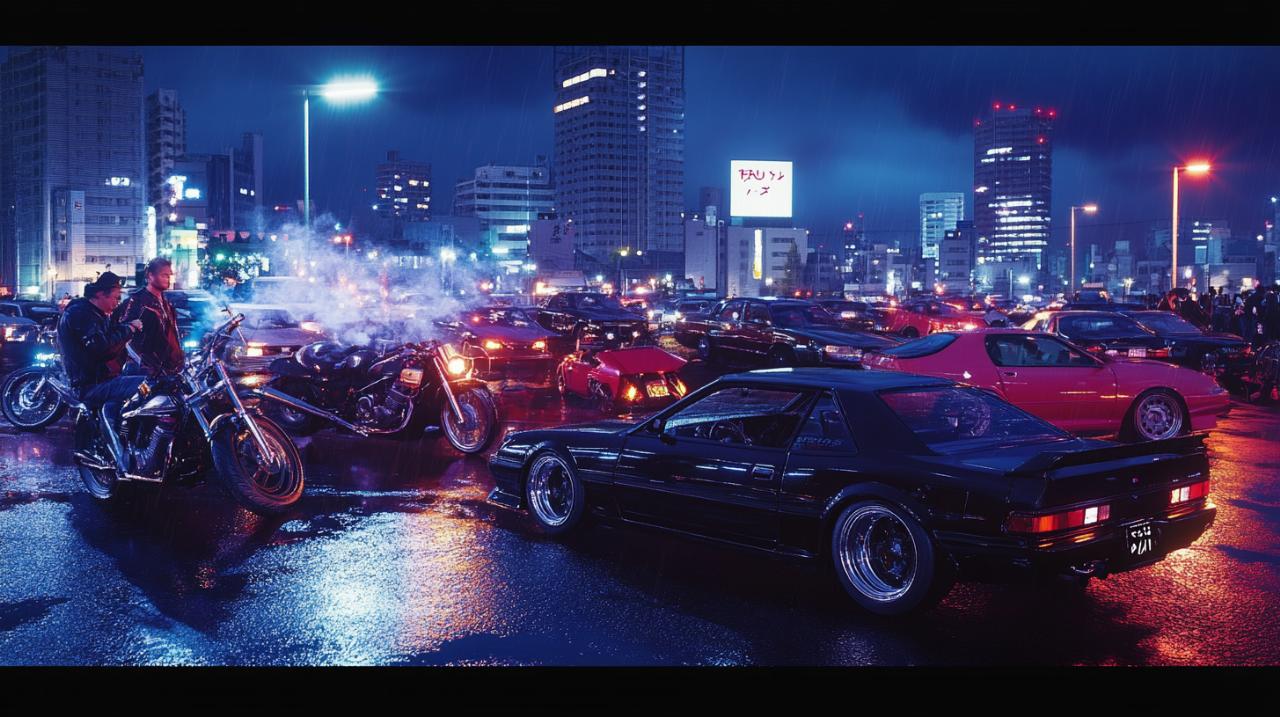
The Toyota Supra, particularly the fourth-generation A80 model with its legendary 2JZ engine, commands respect wherever it appears. These cars have achieved almost mythical status in tuning circles, largely due to their engines’ remarkable ability to handle enormous amounts of power when modified. At Daikoku, you might see examples ranging from completely standard museum pieces to wild creations pushing well over a thousand horsepower. The AE86 Corolla also enjoys a devoted following, these lightweight rear-wheel-drive machines having earned legendary status through their affordability and entertaining handling characteristics.
Mazda’s rotary-powered offerings are equally captivating. The RX-7, across its FC and FD generations, represents one of the most distinctive approaches to sports car design ever to emerge from Japan. The distinctive sound of a rotary engine is unmistakable, and these cars’ flowing, aerodynamic styling ensures they still turn heads decades after they first appeared. The RX-8, Mazda’s more recent rotary offering, also appears with some regularity, appreciated by those who value its unique character despite its more controversial reputation. Beyond these headline acts, you’ll find countless other interesting machines: Honda NSX supercars, Mitsubishi Lancer Evolutions, Subaru Impreza WRX models, and an endless array of modified saloons, estates, and even kei cars that showcase the breadth of Japanese tuning culture.
Experiencing the japanese domestic market car culture firsthand
Visiting Daikoku isn’t simply about looking at cars; it’s about immersing yourself in a culture that values craftsmanship, attention to detail, and a genuine passion for automotive excellence. The experience offers a window into an aspect of Japanese society that visitors rarely encounter, one that’s both welcoming to outsiders and deeply rooted in local tradition.
What to Expect During Your Visit to Daikoku Parking Area
Timing is crucial if you want to witness the scene at its most vibrant. Friday and Saturday nights are typically the busiest periods, with enthusiasts arriving as the sun sets and staying well into the early hours. The atmosphere during these evening gatherings is electric, with the sound of modified exhausts echoing across the pier and the glow of headlights illuminating rows of carefully parked machinery. Sunday mornings offer a completely different vibe, quieter and more relaxed, which makes them ideal for photography enthusiasts who want to capture these vehicles in natural light without the crowds.
Access to the location requires a vehicle, as there’s no pedestrian entrance. The site sits on the Shuto Expressway network, which means you’ll need to pay expressway tolls to reach it. For international visitors without their own transport, car rental services provide one solution, though navigating Japanese expressways can be intimidating for those unfamiliar with local driving conventions. Guided tours represent an increasingly popular alternative, offering hassle-free transport alongside expert commentary about the vehicles and culture you’re witnessing. Some tour operators even incorporate broader Fast and Furious-themed experiences throughout Yokohama for those interested in exploring the cinematic connections to Japanese car culture.
Food and drinks are available on-site, which is fortunate given that many enthusiasts spend hours here. The facilities are typical of Japanese rest areas: clean, efficient, and stocked with the sorts of snacks and beverages you’d expect. Taking photographs and videos is generally permitted and even encouraged, though it’s considered polite to ask permission before photographing someone’s vehicle close-up, particularly if the owner is present. Most enthusiasts are more than happy to discuss their cars and pose for pictures, but respect and courtesy go a long way.
Top Tips for Making the Most of Your Daikoku Experience
Understanding the unwritten rules makes the experience more enjoyable for everyone involved. Police patrol the area regularly, and whilst the presence of law enforcement might seem intimidating, it’s actually reassuring. Their role is to ensure safety and prevent the sorts of antisocial behaviour that could jeopardise the future of these gatherings. Unsafe driving, excessive noise, and disruptive conduct aren’t tolerated, and cooperating with police instructions is essential to avoid penalties. The good news for tourists is that the environment is generally very safe, and instances of trouble are rare.
Arriving with an open mind and a respectful attitude is perhaps the most important preparation. This isn’t a zoo where cars are on display for your entertainment; these are people’s pride and joy, often representing years of work and significant financial investment. Engaging with owners in a friendly manner, showing genuine interest, and avoiding negative comments will ensure you’re welcomed into the community. If you’re lucky enough to be travelling with a Japanese speaker or have basic language skills yourself, the interactions become even richer, though plenty of enthusiasts speak enough English to communicate effectively.
Remember that there’s no fixed schedule dictating when the best gatherings occur. Weather plays a role, as does the time of year, and sometimes the scene is simply quiet for no particular reason. Part of the charm lies in this unpredictability; you never quite know what you’ll encounter. That element of chance makes each visit unique and ensures that even regular attendees continue to be surprised and delighted by what appears. Whether you’re a devoted petrolhead who can identify every model at a glance or simply someone curious about Japanese car culture, Daikoku offers an experience that’s authentic, memorable, and utterly unlike anything you’ll find elsewhere in the world.